
Folding Knives vs Fixed Blades: The Ultimate Buying Guide – Match Your Use Case Perfectly for Doubled Efficiency!
Whether you’re an outdoor enthusiast, a DIY aficionado, or a pragmatist in need of a handy everyday tool, the right knife can make every task twice as easy. But when faced with the two core types of knives – folding knives and fixed blades – many people find themselves in a dilemma: which one is the “golden companion” for your toolkit? The answer is simple: understand your needs, and you’ll choose the right knife. This article will break down the core differences, classification features, scenario adaptability, and cost-effectiveness analysis to help you clear up your doubts completely and find the perfect “reliable helper” for yourself.
I. Core Showdown: The Essential Differences Between Folding Knives and Fixed Blades
Folding Knives: The Top Choice for Portability and Versatility
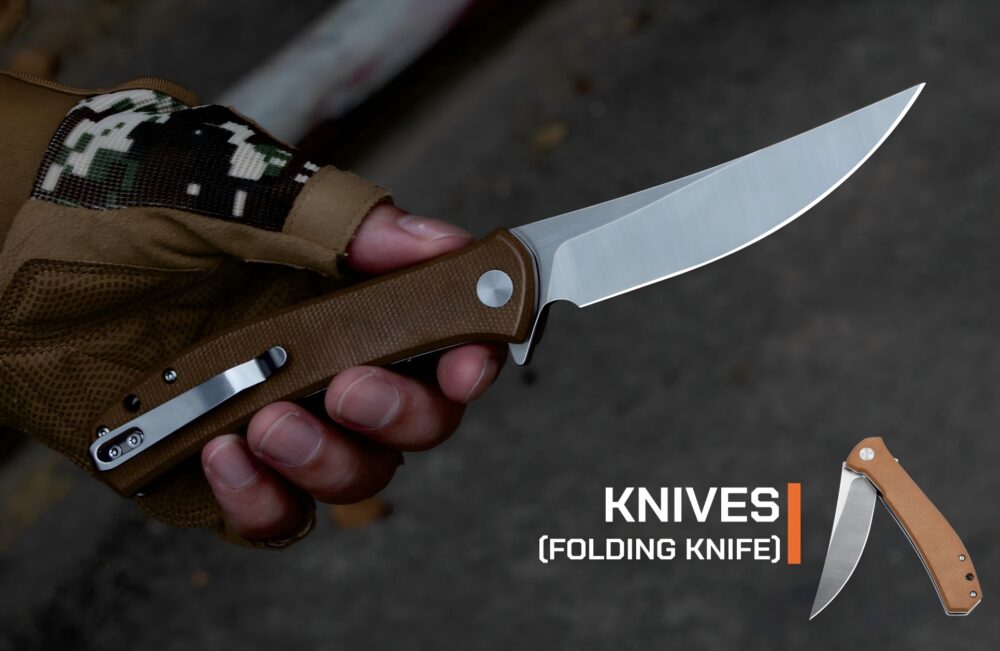
Folding knives are defined by their retractable blades, with their biggest advantage being ultimate portability – when closed, they can easily fit into your pocket, backpack side pocket, or toolkit, taking up no space and avoiding accidental scratches. They’re the ideal choice for everyday carry (EDC). Their design highlights lie in various locking mechanisms:
- Lockback: Features a sturdy spine lock for maximum safety, suitable for scenarios requiring stable operation;
- Liner Lock: Boasts a side-spring lock design that enables one-handed opening, offering exceptional convenience;
- Slip Joint: Has no locking structure, relying on spring tension to stay open, perfect for light cutting tasks.
In terms of usage, folding knives excel at precise, lightweight work such as opening packages, whittling wood, trimming ropes, and other daily or light outdoor tasks. Some multi-functional folding knives (e.g., Swiss Army knives, multi-tool combinations) also integrate screwdrivers, bottle openers, and other accessories, greatly enhancing their practicality.
Fixed Blades: The Powerful Tool for Durability and Heavy-Duty Work
Fixed blades have a blade permanently attached to the handle with no moving parts. This structure endows them with unmatched stability and durability. Their core advantages center on “strength”:
- Full-tang construction (the blade’s metal extends the entire length and width of the handle): Offers exceptional impact resistance, ideal for heavy-load tasks like chopping, pounding, and processing wood;
- Partial-tang design: Lighter in weight while maintaining a certain level of strength, suitable for precise cutting or light-duty work.
Fixed blades eliminate the risk of lock failure, making them extremely reliable in extreme environments (e.g., wilderness survival, heavy cutting). They’re the go-to choice for camping, building shelters, field dressing game, emergency obstacle clearance, and other high-demand scenarios.
II. Scenario-Based Adaptation: Choose Based on Your Specific Needs
Everyday Carry (EDC): Folding Knives Are the Optimal Solution
For daily commutes, shopping, light DIY tasks, and other scenarios, the core requirement for a knife is “compact size and easy portability” – and folding knives fit the bill perfectly. Their sleek design allows you to keep them on hand without being cumbersome, ready to tackle unexpected tasks like opening parcels, cutting food packaging, or fixing small items anytime, anywhere.
Camping & Outdoor Adventures: Both Have Their Roles to Play
Camping demands versatility: folding knives shine with their portability, perfect for quick tasks like cutting fishing lines, preparing snacks, or trimming tent ropes. Fixed blades, on the other hand, are indispensable for heavy-duty work such as batoning wood for fire, building shelters, or processing game – their robust construction ensures they won’t let you down in critical situations.
Culinary & Professional Use: Fixed Blades for Precision and Durability
In professional kitchens, fixed-blade knives (e.g., chef’s knives, cleavers) are the standard. Their full-tang construction and stable blade ensure precise cutting, chopping, and slicing, withstanding the rigors of daily commercial use. For outdoor cooking or light picnic prep, a compact folding knife can also serve, but fixed blades remain the top choice for serious culinary tasks.
Survival & Heavy-Duty Tasks: Fixed Blades Are Unrivaled
In wilderness survival, search and rescue, or heavy-duty cutting tasks (e.g., cutting through thick vegetation, breaking through obstacles), fixed blades are non-negotiable. Their one-piece construction and impact resistance make them reliable even in the harshest conditions, where folding knives might fail due to structural limitations.
III. Cost-Effectiveness Analysis: Look Beyond the Initial Price
Folding Knives: Higher Initial Cost, Long-Term Versatility
Folding knives often have a higher upfront price due to their complex locking mechanisms and brand reputation. However, their versatility (especially multi-tool models) eliminates the need for separate tools, offering long-term value. With proper maintenance (cleaning, oiling moving parts), a high-quality folding knife can last for years, making it a worthwhile investment for EDC users.
Fixed Blades: Lower Initial Cost, Potential Additional Expenses
Fixed blades typically have a lower initial price thanks to their simpler design and lower manufacturing costs. However, additional expenses may include protective sheaths (sometimes sold separately) and specialized sharpening tools. High-end fixed blades for professional use (e.g., premium chef’s knives) can also command a premium due to superior materials and craftsmanship – a justifiable investment for those relying on precision and durability daily.
IV. Maintenance Tips for Longevity
Folding Knife Maintenance
- Regularly clean the blade and hinge to remove dirt and debris;
- Oil moving parts (e.g., the hinge and lock) to prevent rust and ensure smooth operation;
- Inspect the locking mechanism regularly to ensure it functions properly.
Fixed Blade Maintenance
- Clean the blade after use, especially after contact with moisture or food, to prevent corrosion;
- Store in a dry place with a protective sheath to avoid scratches and accidental injury;
- Sharpen regularly with appropriate tools to maintain cutting performance.
Conclusion: Choose the Right Knife for Your Needs
The choice between a folding knife and a fixed blade ultimately comes down to your priorities: if portability, versatility, and everyday convenience are key, a folding knife is your best bet. If you need raw strength, reliability, and durability for heavy-duty tasks or extreme environments, a fixed blade is unparalleled. By matching your use case with the unique advantages of each type, you’ll not only enhance efficiency and safety but also get the most value out of your investment.
Ready to find your perfect knife? Explore our curated collection of folding knives and fixed blades tailored to every need – your next reliable tool is just a click away!